
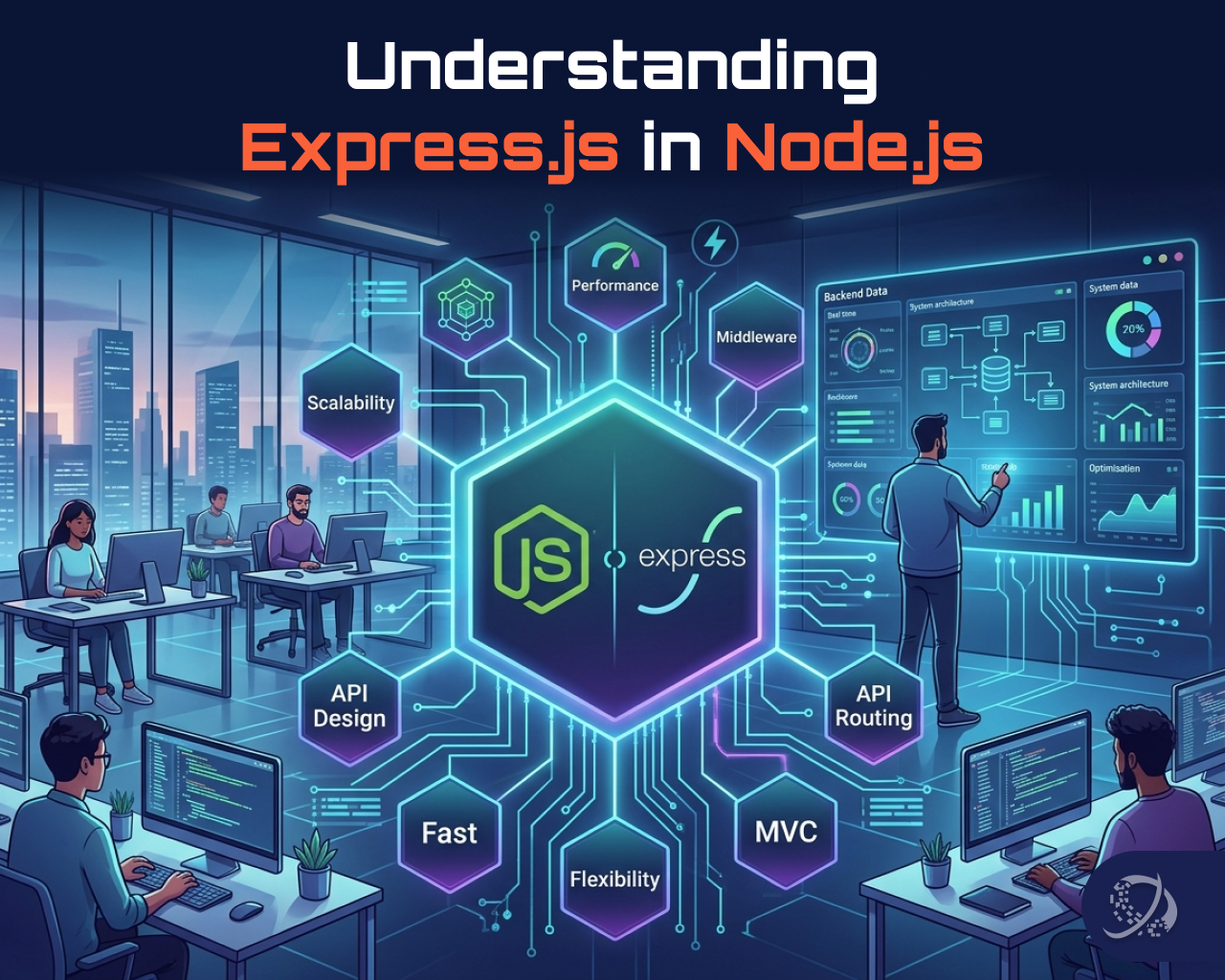
Introduction
In today’s technology-driven landscape, backend systems are the backbone of every scalable digital product. From powering high-performance APIs to enabling seamless user experiences across web and mobile platforms, backend frameworks play a critical role in determining application success. Among the many tools available, Express.js has emerged as a preferred choice for developers working with Node.js due to its simplicity, flexibility, and efficiency. It provides a streamlined way to build robust server-side applications without unnecessary complexity, making it ideal for both startups and large-scale enterprises. With its lightweight architecture and powerful middleware capabilities, Express.js allows developers to design applications that are not only fast but also highly maintainable. As organizations increasingly adopt API-first and microservices-based approaches, understanding Express.js becomes essential for building modern, scalable, and future-ready backend systems.
Table of Contents
- Introduction
- What is Express.js?
- Why Express.js is a Preferred Choice for Engineering Teams?
- Deep Dive into Core Features
- Middleware Architecture (The Heart of Express)
- Template Engine Integration
- Real-World Applications of Express.js
- Express.js in Scalable System Design
- Why Express.js Remains a Long-Term Investment
- Conclusion
What is Express.js?
Express.js is a minimalist yet powerful web framework built on top of Node.js. It provides a thin abstraction layer over Node’s core HTTP module, enabling developers to build web servers and APIs with significantly less effort and complexity.
Unlike opinionated frameworks, Express gives you complete control over application structure, making it highly adaptable for everything from simple APIs to complex distributed systems.
Why Express.js is a Preferred Choice for Engineering Teams
Express.js isn’t just about simplicity it’s about efficiency at scale. Here’s why it remains a top choice:
Minimal & Unopinionated Architecture
Express does not enforce strict design patterns. This flexibility allows teams to define their own architecture be it MVC, layered, or domain-driven design based on project needs.
Faster Development Cycles
With reduced boilerplate code and intuitive APIs, developers can build and deploy features rapidly, which directly impacts time-to-market.
Middleware-Driven Ecosystem
The middleware pattern enables modular, reusable, and maintainable code. From authentication and logging to validation and caching, everything integrates seamlessly.
API-First Development
Express is purpose-built for RESTful APIs, making it ideal for modern frontend frameworks (React, Angular, Vue) and mobile apps.
Strong Community & Ecosystem
With thousands of open-source packages and widespread adoption, Express ensures long-term reliability and support.
Deep Dive into Core Features
Advanced Routing System
Express provides a robust routing mechanism to handle different HTTP methods and endpoints efficiently. You can organize routes into modular files, enabling clean and scalable codebases.
Example:
app.get('/users', handler); app.post('/users', handler); app.put('/users/:id', handler); app.delete('/users/:id', handler);Middleware Architecture (The Heart of Express)
Middleware functions sit between the request and response cycle, allowing you to process requests in stages.
Common Middleware Use Cases:
- Authentication & Authorization
- Request Validation
- Logging & Monitoring
- Error Handling
- Data Transformation
Example:
app.use((req, res, next) => { console.log('Request received'); next(); });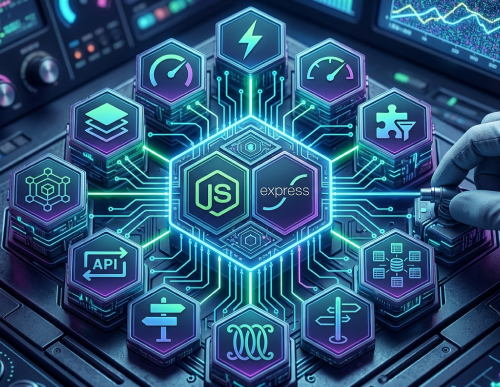
Template Engine Integration
While Express is often used for APIs, it also supports server-side rendering using template engines like EJS, Pug, or Handlebars—useful for dynamic web applications.
Example:
app.use((err, req, res, next) => { res.status(500).json({ error: err.message }); });Centralized Error Handling
Error handling in Express can be standardized across the application, ensuring consistent responses and improved debugging.
Static File Serving
Express can efficiently serve static assets like images, CSS, and JavaScript files without additional configuration.
Real-World Applications of Express.js
For Android app development, proper SDK and emulator configuration is essential.
RESTful API Development
Powering SaaS platforms, fintech apps, and enterprise systems.
Microservices Architecture
Breaking down monoliths into scalable, independent services.
Real-Time Applications
Use the AVD Manager in Android Studio to create a virtual device for testing.
When paired with WebSockets (e.g., Socket.io), it supports chat apps, live tracking systems, and collaborative tools.
Express.js in Scalable System Design
For senior engineers and tech leaders, Express offers strategic advantages:
- Horizontal Scalability with load balancing and containerization (Docker/Kubernetes)
- Seamless Integration with databases (MongoDB, PostgreSQL, Redis)
- Cloud-Native Compatibility (AWS, Azure, GCP)
- Microservices Enablement with lightweight service creation
Challenges to Consider
While Express is powerful, it requires thoughtful architecture:
- Lack of built-in structure → Use patterns like MVC or clean architecture
- Middleware complexity → Maintain clear layering and documentation
- Scaling large apps → Use modularization and service separation
Why Express.js Remains a Long-Term Investment
Express.js has stood the test of time because it adapts to evolving development needs. It doesn’t lock teams into rigid patterns, allowing innovation while maintaining stability. For organizations, this means:
- Reduced technical debt
- Flexible architecture evolution
- Proven scalability in production
- For organizations, this means:
Conclusion
In conclusion, Express.js continues to be a cornerstone of modern backend development, offering the perfect balance between simplicity and power. Its lightweight and unopinionated nature allows developers to build applications tailored to specific business needs while maintaining flexibility for future scaling. From designing RESTful APIs to supporting microservices and real-time applications, Express.js proves its versatility across various use cases. For organizations, this translates into faster development cycles, reduced complexity, and improved system performance. While it requires thoughtful structuring for large-scale projects, its extensive ecosystem and community support make it easier to overcome such challenges. As the demand for scalable and high-performing applications continues to grow, mastering Express.js is not just a technical advantage but a strategic investment. It equips developers and teams with the tools needed to build efficient, reliable, and future-ready backend systems in an increasingly competitive digital landscape.

Discover Your Ideas With Us
Transform your business with our Web Development solutions. Achieve growth, innovation, and success. Collaborate with our skilled development team today to revolutionize your digital presence!